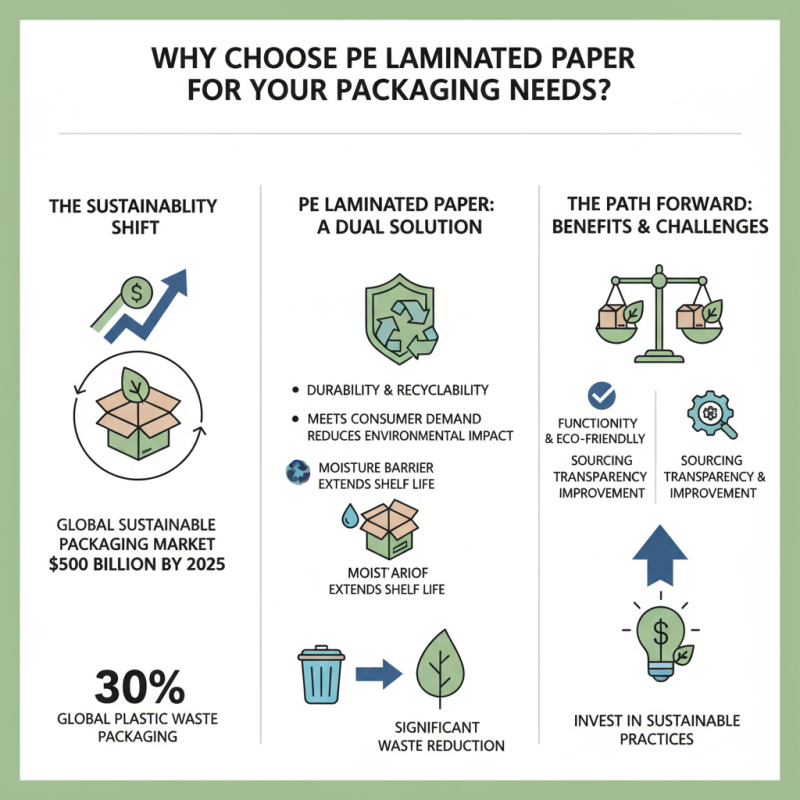
In the evolving packaging industry, the demand for sustainable materials has surged. According to the Smithers Pira report, the global market for sustainable packaging is projected to reach $500 billion by 2025. As businesses seek eco-friendly solutions, PE Laminated Paper emerges as a vital player. This material combines durability and recyclability, meeting consumer expectations while reducing environmental impact.
PE Laminated Paper is engineered for versatile applications. Its moisture barrier properties enhance product shelf life, a crucial factor in food packaging. A study revealed that packaging accounts for 30% of the global plastic waste. By opting for PE Laminated Paper, companies can significantly contribute to waste reduction while maintaining product integrity. However, sourcing and production practices must improve to ensure long-term sustainability.
Choosing PE Laminated Paper involves weighing benefits against challenges. While it offers excellent functionality, its production sometimes lacks transparency. Investing in better sourcing and manufacturing practices is crucial for businesses looking to lead in the sustainable packaging movement. Ultimately, understanding these nuances can guide companies in making informed choices that align with their values and market demands.
Benefits of Pe Laminated Paper in Packaging Solutions
Pe laminated paper is gaining traction in the packaging industry due to its numerous benefits. This material is known for its excellent moisture resistance, making it ideal for products that need protection from humidity. According to a recent market report, the demand for moisture-resistant packaging is projected to grow by 7.5% annually through 2025. Companies are realizing that using pe laminated paper can significantly improve product shelf life and freshness.
In addition, pe laminated paper offers a versatile printing surface. This allows for vibrant designs that capture consumer attention. Research indicates that packaging with high-quality graphics can increase customer purchase intention by up to 60%. However, while the visual appeal is crucial, many companies overlook the importance of sustainable sourcing. It's essential to ensure that the materials used are responsibly obtained.
Moreover, pe laminated paper is lightweight, which can reduce shipping costs. A report by the Packaging Association highlights that lightweight packaging can lead to a 25% reduction in transportation expenses. However, companies need to evaluate their supply chains critically. Sometimes, opting for lighter materials may compromise durability. Balancing cost, efficiency, and quality remains a challenge for the industry.
Durability and Water Resistance of Pe Laminated Paper
When it comes to packaging, durability and water resistance are crucial. PE laminated paper exhibits impressive features in these areas. This type of paper is coated with a thin layer of polyethylene, enhancing its strength and making it less vulnerable to tears. The added layer provides a boost, allowing businesses to transport goods without fear of damage.
Water resistance is another key benefit. When exposed to moisture, traditional paper can quickly weaken. In contrast, PE laminated paper stands strong, repelling water effectively. This benefit is particularly valuable for products that may encounter damp environments. It ensures that the packaging remains intact until the end user receives it.
However, it is important to understand that not all PE laminated papers are created equal. Various manufacturing techniques can affect the overall quality. Therefore, sourcing from reliable suppliers is essential. It is also worth noting that while PE laminated paper offers many advantages, environmental considerations should not be overlooked.
Balancing durability with sustainability is a challenge worth discussing.
Eco-Friendliness and Recyclability of Pe Laminated Paper
PE laminated paper stands out as a sustainable choice for packaging. Its eco-friendliness is often overlooked, yet it plays a significant role in reducing waste. Made from recyclable materials, this paper can be processed again after its initial use. It offers strength and durability, making it practical for various packaging needs. This durability aids in minimizing damage during transport, further contributing to its sustainability.
Recyclability is another critical aspect of PE laminated paper. When consumers choose this option, they support a circular economy. The paper can be re-pulped, which reduces the need for virgin materials. However, not all facilities can recycle laminated papers effectively. This limitation raises questions about accessibility and waste management systems, prompting a need for improvement in recycling infrastructure.
Educating consumers on proper disposal methods is essential. While PE laminated paper is designed to be reusable and recyclable, not every municipality has the capability to process it. This gap creates a challenge in maximizing its environmental benefits. Awareness and improved recycling systems are crucial for fully leveraging the eco-friendly aspects of PE laminated paper.
Why Choose Pe Laminated Paper for Your Packaging Needs?
This bar chart illustrates the key factors influencing the choice of PE laminated paper for packaging. According to studies, eco-friendliness and consumer preference are the leading reasons for selecting this sustainable packaging option.
Cost-Effectiveness of Using Pe Laminated Paper for Packaging
PE laminated paper stands out as a cost-effective solution for packaging needs. Its durability and moisture resistance make it a preferred option for various industries. By reducing the chances of product damage, businesses can save money on replacements and returns.
When considering packaging materials, it's essential to evaluate their environmental impact. PE laminated paper offers recyclability, making it a greener alternative to some plastic options. This helps brands appeal to eco-conscious consumers, potentially increasing sales.
Tips: Choose the right thickness for your product. Thicker papers provide better protection but may be more expensive. Always conduct tests to gauge how well your packaging performs. Experimenting with designs can also lead to cost savings by reducing material waste.
Versatility of Pe Laminated Paper in Various Industries
PE laminated paper is gaining traction across various industries, owing to its exceptional versatility. Its applications span from food packaging to consumer goods. The global packaging market for laminated papers is projected to reach USD 22 billion by 2025. This showcases a significant shift towards sustainable and adaptive packaging solutions.
In the food industry, PE laminated paper provides excellent moisture barrier properties. According to a recent industry report, approximately 60% of food packaging is moving towards materials that enhance shelf life. Brands favor it due to its compatibility with eco-friendly practices. However, achieving a balance between protection and sustainability remains a challenge. The production process of laminated materials can produce waste, leading to questions regarding their overall environmental impact.
The retail sector also benefits from PE laminated paper. It is lightweight but sturdy, making it ideal for packaging everyday items. Research indicates that consumers increasingly prefer packaging that is not only functional but also visually appealing. Yet, the reliance on single-use products poses a dilemma—balancing user convenience with long-term waste concerns. As industries adopt PE laminated paper, they must continuously evaluate its benefits against its ecological footprint.
FAQS
: It has a polyethylene coating that enhances strength and resists tearing. The coating provides additional protection during transport.
It repels water effectively. Unlike traditional paper, it remains strong in moist environments, keeping contents safe.
No, quality varies by manufacturing techniques. Sourcing from reliable suppliers is crucial for consistent performance.
It is widely used in food packaging and consumer goods. Its versatility makes it suitable for various applications.
It provides excellent moisture barriers, helping to extend shelf life and protect products from spoilage.
Yes, achieving a balance between durability and environmental impact is challenging. Production can generate waste that affects sustainability.
Consumers value functional and visually appealing packaging. However, there are concerns about single-use waste.
Some brands favor it for eco-friendly practices, but the production process raises environmental questions.
They must evaluate its benefits against ecological footprint. Continuous reflection on sustainability practices is needed.
Balancing user convenience with long-term waste concerns is a significant issue for many industries.
Conclusion
Pe Laminated Paper is an excellent choice for packaging solutions due to its numerous benefits. Its durability and water resistance make it ideal for protecting products from external elements, ensuring that contents remain safe and intact. Additionally, Pe Laminated Paper is eco-friendly and recyclable, appealing to environmentally conscious businesses seeking sustainable packaging options.
Furthermore, it offers cost-effectiveness, providing an economical alternative without compromising quality. The versatility of Pe Laminated Paper enables its use across various industries, from food and beverage to retail and pharmaceuticals, catering to diverse packaging requirements. Overall, opting for Pe Laminated Paper enhances both product protection and environmental responsibility.

 UPG International